FIRE SPRINKLER TESTING IN LOS ANGELES
NFPA 25 inspection requirements and LAFD Regulation 4 compliance for commercial and high-rise sprinkler systems in LA.
Last updated:
NFPA 25 inspection requirements and LAFD Regulation 4 compliance for commercial and high-rise sprinkler systems in LA.
Last updated:
Fire sprinkler systems are the single most effective fire suppression measure in commercial buildings. When properly maintained, sprinklers control or extinguish fires before they spread, protecting occupants and property. But a sprinkler system that has not been tested may have hidden problems — corroded heads, stuck valves, low water pressure, or blocked piping — that prevent it from activating when it matters most.
In Los Angeles, fire sprinkler testing is not optional. Commercial property owners must comply with both NFPA 25 (the national standard for water-based fire protection systems) and LAFD Regulation 4 (the City of Los Angeles's annual fire life safety testing requirement). This guide explains what testing involves, how often it is required, and what building owners should expect.
NFPA 25 — the Standard for the Inspection, Testing, and Maintenance of Water-Based Fire Protection Systems — is the governing standard for fire sprinkler testing across the United States. It defines what components must be inspected, how often they must be tested, and what maintenance actions are required. Los Angeles adopts NFPA 25 as part of its fire code, so LA commercial buildings must follow these requirements.
NFPA 25 sets different inspection and testing intervals depending on the component:
The annual fire sprinkler test is the most comprehensive regular inspection. A licensed C-16 fire protection contractor performs the following checks:
The main drain test verifies that the water supply to the sprinkler system is adequate. The contractor opens the main drain valve fully and records the static pressure (before flow) and residual pressure (during flow). A significant drop from the prior year's results can indicate a water supply problem, a partially closed valve, or an obstruction in the underground piping.
The inspector's test valve simulates the activation of a single sprinkler head at the most remote point of the system. When opened, it should trigger the waterflow alarm within 90 seconds, verifying that the alarm system will notify occupants and the fire department if a real sprinkler activates.
All control valves — including OS&Y (outside stem and yoke) valves, PIV (post indicator valves), and butterfly valves — are inspected to confirm they are in the correct open or closed position, properly sealed or locked, and equipped with functioning tamper switches that send a supervisory signal if the valve is moved.
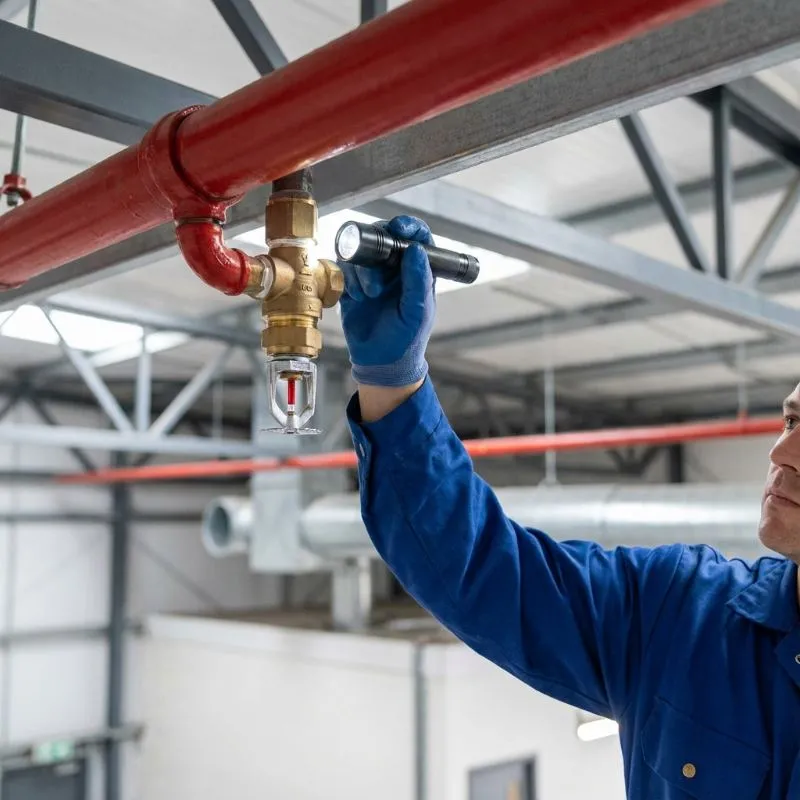
Every visible sprinkler head is inspected for physical damage, corrosion, paint or coatings (which can prevent activation), proper orientation, and adequate clearance. NFPA 25 requires a minimum 18 inches of clearance below each sprinkler head. Heads showing signs of damage, loading, or corrosion must be replaced.
Waterflow alarms and their notification appliances are tested to confirm the building's fire alarm panel receives the waterflow signal and activates audible and visual alarms. If the building is monitored by a central station, the alarm transmission is verified as well.
Every five years, NFPA 25 requires an internal inspection of sprinkler system piping. A representative section of pipe is removed or opened and examined for:
If the inspection reveals significant buildup, the system may need flushing, chemical treatment, or pipe replacement. California Title 19 also mandates this five-year inspection for all commercial buildings statewide, so Los Angeles property owners must meet both the state and LAFD requirements.
LAFD Regulation 4 requires annual fire life safety testing for high-rise buildings (75 feet or taller) and certain commercial properties within the City of Los Angeles. Fire sprinkler testing is one of the core components of a Reg 4 inspection, alongside fire alarm testing, standpipe testing, fire pump testing, emergency lighting testing, and backflow preventer testing.
For Regulation 4 compliance, the sprinkler testing must be performed by a licensed C-16 fire protection contractor, and the results must be documented and submitted to the LAFD Fire Prevention Bureau before the building's annual compliance deadline. The contractor handles all documentation and submissions on the building owner's behalf. For a month-by-month planning timeline, see our Reg 4 compliance calendar, or review our property manager's fire compliance guide for a complete overview of managing annual testing.
Sprinkler systems in Los Angeles commercial buildings commonly fail testing due to:
When deficiencies are found, the testing contractor provides a detailed report and can typically handle the repair work and follow-up re-testing to bring the system into compliance.
Building owners should schedule sprinkler testing well in advance of their LAFD Regulation 4 compliance deadline. A typical sprinkler test for a commercial building takes several hours; high-rise buildings with multiple risers and zones may take a full day or more. Testing is coordinated around building operations to minimize disruption — the contractor works floor by floor and notifies tenants in advance.
It is important to schedule enough lead time for deficiency repairs and re-testing if needed. Waiting until the last week before your deadline leaves no margin for corrections if the system does not pass on the first attempt.
Fire sprinkler systems in Los Angeles commercial buildings require multiple levels of testing: weekly or monthly visual inspections of gauges and valve positions, quarterly inspections of waterflow alarm devices and valve supervisory switches, annual flow tests and full system inspections per NFPA 25, and five-year internal pipe inspections. LAFD Regulation 4 requires annual testing documentation to be submitted to the Fire Prevention Bureau.
A fire sprinkler test per NFPA 25 includes visual inspection of all sprinkler heads for damage, corrosion, or obstruction; main drain and inspector's test valve flow tests to verify water supply pressure; valve operation checks on all control valves and tamper switches; waterflow alarm testing to confirm the alarm activates when water flows; fire pump testing if the building has a pump; and a review of antifreeze concentration in systems that use antifreeze loops.
Fire sprinkler testing in Los Angeles must be performed by a licensed C-16 fire protection contractor. For buildings subject to LAFD Regulation 4, the contractor must be approved by the Los Angeles Fire Department and must submit all testing documentation to the LAFD Fire Prevention Bureau on behalf of the building owner.
NFPA 25 requires that sprinkler system piping be internally inspected every five years. A section of pipe is opened and examined for corrosion, scale buildup, biological growth, or obstructions that could block water flow during a fire. If issues are found, the system may need flushing, treatment, or pipe replacement. California Title 19 also mandates this inspection for all commercial buildings.
If a sprinkler system fails any component of testing, the building owner receives a deficiency report listing what must be repaired. Common issues include corroded or painted-over sprinkler heads, stuck or improperly positioned control valves, low water pressure, and non-functional waterflow alarms. A licensed C-16 contractor can typically handle both the repair and the follow-up re-test.
Yes. Los Angeles commercial properties must meet both LAFD Regulation 4 and California Title 19 requirements. Regulation 4 applies to high-rise buildings and certain commercial properties within the City of Los Angeles and requires annual documentation submitted to LAFD. Title 19 is a statewide requirement for all commercial buildings. Meeting Reg 4's sprinkler testing requirements generally satisfies the corresponding Title 19 requirements as well.
LA Fire Compliance provides complete fire sprinkler testing for commercial and high-rise buildings in Los Angeles. NFPA 25 inspections, LAFD Regulation 4 documentation, and deficiency retesting — all handled by our licensed C-16 team.