WHAT IS LAFD REGULATION 4?
A complete guide to Los Angeles Fire Department Chief's Regulation 4 — the annual fire life safety testing requirement for high-rise and commercial buildings in LA.
Last updated:
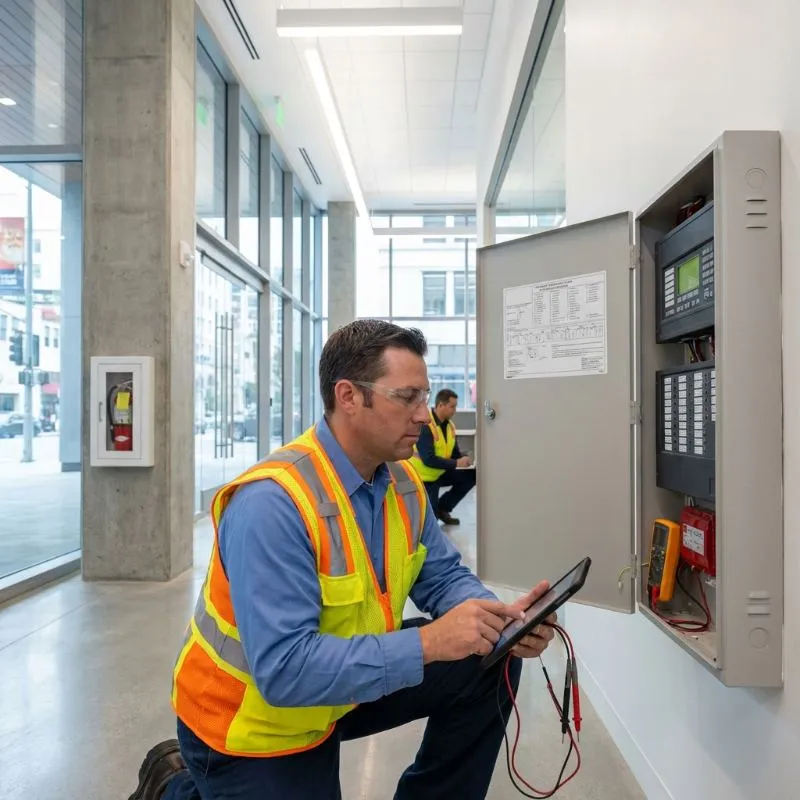
A complete guide to Los Angeles Fire Department Chief's Regulation 4 — the annual fire life safety testing requirement for high-rise and commercial buildings in LA.
Last updated:
LAFD Regulation 4, formally known as the Chief's Regulation 4, is a fire safety rule enforced by the Los Angeles Fire Department (LAFD). It requires that certain buildings within the City of Los Angeles undergo annual testing of their fire life safety systems. The regulation exists to ensure that fire protection equipment — sprinklers, alarms, standpipes, fire pumps, emergency lighting, and backflow preventers — is maintained in working order and ready to protect occupants in an emergency.
Regulation 4 is specific to the City of Los Angeles. Buildings outside city limits fall under their own local jurisdiction's fire safety requirements, though California Title 19 applies statewide. Los Angeles building owners must comply with both Regulation 4 and Title 19.
Regulation 4 applies primarily to high-rise buildings — those 75 feet or taller — and certain other commercial properties that contain fire life safety systems. The types of buildings that typically require Reg 4 compliance include:
If your commercial building in Los Angeles has fire protection systems installed, it is important to confirm whether Regulation 4 testing applies. A licensed C-16 fire protection contractor can review your building's systems and determine your compliance requirements.
Regulation 4 testing covers the full range of fire life safety systems found in commercial and high-rise buildings. Each system is tested according to the applicable NFPA (National Fire Protection Association) standard or local code requirement.
Sprinkler systems are tested per NFPA 25 (Standard for the Inspection, Testing, and Maintenance of Water-Based Fire Protection Systems). Testing includes flow tests, visual inspections of sprinkler heads and piping, valve operation checks, and verification that the system will deliver adequate water pressure in the event of a fire. For a detailed breakdown of NFPA 25 testing frequencies and procedures, see our fire sprinkler testing guide.
Alarm systems are tested per NFPA 72 (National Fire Alarm and Signaling Code). This includes testing all smoke detectors, heat detectors, pull stations, notification appliances (horns, strobes), and the fire alarm control panel. Central station monitoring connections are also verified. Our fire alarm testing guide covers the full NFPA 72 inspection schedule and component-level testing procedures.
Standpipes provide firefighters with a water supply inside the building. Testing verifies water flow, pressure, and that all hose connections and valves are accessible and operational. Learn more about standpipe classes, five-year flow tests, and hydrostatic testing in our standpipe testing guide.
Fire pumps boost water pressure to ensure sprinkler and standpipe systems can operate effectively in tall buildings. Testing includes annual flow tests per NFPA 25, verifying pump performance, controller operation, and backup power transfer. For details on churn tests, annual flow tests, and the 65% pressure criterion, see our fire pump testing guide.
Emergency lighting and exit signs must function during a power outage. Testing includes the monthly 30-second functional test and the annual 90-minute full-duration battery load test. All exit signs must be illuminated, visible, and properly mounted at required heights. Our emergency lighting testing guide covers NFPA 101 requirements and common deficiencies.
Backflow prevention devices protect the city water supply from contamination by the building's fire protection system. These devices must be tested annually by a certified tester to verify they are functioning correctly. For details on DCVA and RPZ testing procedures and LADWP certification requirements, see our backflow preventer testing guide.
Regulation 4 testing is required once per year. Building owners must complete all required system tests and submit the documentation to the LAFD Fire Prevention Bureau before their annual compliance deadline. This deadline is typically the anniversary of the building's initial compliance date.
Missing the deadline or failing to submit documentation can trigger LAFD enforcement actions. It is recommended to schedule testing well in advance of your deadline to allow time for any deficiency repairs and re-testing if needed.
Building owners in Los Angeles often ask about the difference between Regulation 4 and California Title 19. Both require fire system testing, but they are separate requirements:
Los Angeles properties must comply with both. Regulation 4 generally has more comprehensive testing requirements than Title 19 alone, so meeting Reg 4 typically satisfies the corresponding Title 19 requirements as well — but building owners should confirm this with their fire protection contractor.
A typical Regulation 4 testing engagement follows these steps:
If deficiencies are found during testing, the building is not immediately penalized — the owner receives a detailed report of what needs to be repaired. However, deficiencies must be corrected and the affected systems re-tested promptly. Continued non-compliance can result in LAFD enforcement actions, including fines and potential occupancy restrictions.
Working with a qualified fire protection contractor makes this process manageable. Most contractors can handle both the repair work and the follow-up re-inspection, keeping you on track for full compliance. For a month-by-month planning timeline, see our Reg 4 compliance calendar.
Regulation 4 testing must be performed by a licensed C-16 fire protection contractor who is approved by the LAFD. When selecting a contractor, consider whether they can test all required systems (sprinklers, alarms, standpipes, fire pumps, emergency lighting, and backflow preventers) in a single engagement, handle all LAFD paperwork and submissions, and coordinate retesting if deficiencies are found. For guidance on what to look for in a contractor and how to manage the compliance process, see our property manager's fire compliance guide. High-rise buildings with smoke control systems should also review our smoke control testing guide.
LAFD Regulation 4 (also called Chief's Regulation 4 or Reg 4) is a Los Angeles Fire Department rule that requires annual fire life safety testing for high-rise buildings (75 feet or taller) and certain other commercial properties within the City of Los Angeles. It covers fire sprinkler systems, fire alarm systems, standpipes, fire pumps, emergency lighting, exit signs, and backflow preventers.
Regulation 4 applies to high-rise buildings 75 feet or taller and certain commercial properties within the City of Los Angeles that have fire life safety systems. This includes office towers, hotels, hospitals, and commercial complexes. The regulation does not apply to buildings outside the City of Los Angeles, which fall under other local jurisdictions.
Regulation 4 testing is required annually. Building owners must complete all required testing and submit documentation to the LAFD Fire Prevention Bureau before their compliance deadline, which is typically the anniversary of their initial compliance date.
Regulation 4 testing covers fire sprinkler systems (per NFPA 25), fire alarm systems (per NFPA 72), standpipe systems, fire pump assemblies, emergency and exit lighting, and backflow prevention devices. Testing must be performed by a licensed C-16 fire protection contractor.
Title 19 is a California state requirement that applies to all commercial buildings statewide, while Regulation 4 is specific to the City of Los Angeles and applies primarily to high-rise buildings. Los Angeles properties must comply with both. Regulation 4 typically has more comprehensive testing requirements than Title 19 alone.
If deficiencies are found during Reg 4 testing, the building owner receives a detailed list of required corrections. The owner must address these issues and schedule re-testing. Continued non-compliance can result in LAFD enforcement actions, fines, and potential occupancy restrictions. Once corrections are completed, a licensed C-16 fire protection contractor handles the re-inspection and submits documentation to LAFD.
Regulation 4 testing must be performed by a licensed C-16 fire protection contractor who is approved by the Los Angeles Fire Department. The contractor must have the appropriate certifications, insurance, and experience to test all required fire life safety systems and submit documentation to the LAFD Fire Prevention Bureau.
LA Fire Compliance provides complete LAFD Regulation 4 testing for commercial and high-rise buildings in Los Angeles. We test all required systems, handle LAFD paperwork, and coordinate deficiency retesting.